Shilajit Guide by Minerals Pitch
Everything you actually need to know — from mountain to daily use. No filler. No marketing fluff. Just the real science and practical detail.
Fulvic Acid
The core of everything Shilajit does — and why it works differently from any other supplement.
Fulvic acid is not just one ingredient among many in Shilajit. It is the primary reason Shilajit works the way it does. Produced when plant matter decomposes over centuries in mineral-rich mountain environments, fulvic acid has an extraordinarily low molecular weight — which means it passes through cell membranes with ease, something most nutrients cannot do on their own.
What this means practically is that fulvic acid acts as a biological transport system. It carries minerals, antioxidants, and other compounds directly into your cells rather than leaving them circulating in the bloodstream or passing through unabsorbed. This is why people taking quality Shilajit often notice effects that feel different from regular supplementation — the nutrients are actually reaching where they need to go.
Key marker of quality: High-grade Shilajit resin contains between 40-60 percent humic substances, of which fulvic acid is the most biologically active fraction. This percentage is one of the primary indicators of genuine, potent Shilajit.
Beyond transport, fulvic acid is a potent antioxidant that neutralises free radicals, reduces cellular inflammation, supports detoxification by binding to heavy metals, and plays a direct role in mitochondrial energy production. Research also suggests neuroprotective properties, making it relevant for cognitive health and long-term brain function.
Dibenzopyrones (DBPs)
The compound most brands never mention — and one of the most important reasons real Shilajit outperforms imitations.
Dibenzopyrones, known as DBPs, are a class of organic compounds found in Shilajit that most supplement brands either overlook entirely or mention without explanation. They work in close partnership with fulvic acid, particularly in relation to energy production. DBPs support the function of CoQ10 — a compound essential for mitochondrial energy synthesis — by stabilising it and making it more bioavailable.
Without adequate DBPs, the energy-related benefits of Shilajit are significantly diminished. Their presence in a product is one of the markers that separates genuine resin from diluted or heavily processed alternatives.
What affects DBP concentration: Altitude, source region, and processing method all influence DBP levels. Authentic Himalayan resin harvested at high altitude and minimally processed retains its DBP content far better than powdered or heavily standardised extracts.
Resin vs Powder
This decision matters more than most people think. Form directly affects potency.
| Factor | Resin | Powder |
|---|---|---|
| Processing level | Minimal — closest to natural form | High — dried, ground, extracted |
| Fulvic acid content | Highest concentration | Reduced through processing |
| DBP retention | Fully preserved | Partially degraded by heat |
| Taste | Strongly bitter — authentic indicator | Mild or tasteless in capsules |
| Best for | Maximum potency and results | Convenience when quality is verified |
Resin is the benchmark. Powder is acceptable for convenience when sourcing is confirmed — but it is a step down in potency. If you have the choice, always choose resin from a verified source.
Real vs Fake Shilajit
A significant portion of what is sold online contains little to no genuine Shilajit. Here is how to tell the difference.
Signs of Genuine Shilajit
- It is bitter. Authentic Shilajit has a strong, distinctly bitter and earthy taste. Mild or sweet-tasting products are not genuine.
- It dissolves completely in warm water. Real resin dissolves fully within a minute or two, leaving a dark, clear liquid with no gritty residue.
- It hardens in cold and softens in warmth. Firm and brittle when cold, soft and pliable when warm — this is a reliable physical test.
- It has a strong mineral smell. A distinctive earthy, slightly smoky aroma. Products with no scent are suspicious.
- It comes with lab reports. Legitimate producers provide third-party Certificates of Analysis for every batch.
Red Flags for Fake Products
- Sold as pressed tablets or lozenges — genuine resin cannot be tableted without significant processing
- Unusually low price — quality Shilajit is expensive to source and purify correctly
- No information on altitude, region, or processing method
- Artificially coloured using caramel colouring to mimic genuine resin appearance
- No third-party lab documentation available
Altitude Extraction
Where it comes from changes everything. Altitude is a functional quality indicator, not a marketing detail.
Not all mountain rock produces Shilajit of equal quality. Genuine high-grade Shilajit is found at altitudes above 3,000 metres, with the most potent material typically coming from above 4,000 to 5,000 metres. At these elevations, the geological and biological conditions combine — centuries of compressed organic plant matter, mineral-rich rock formations, extreme temperature cycles, and low oxygen pressure — to create a resin with exceptional compound density.
At lower altitudes, these conditions are simply not present to the same degree. The resulting material may look similar but carries a fraction of the fulvic acid concentration and mineral complexity of high-altitude resin.
The rule of thumb: Any brand serious about its product can tell you exactly where and at what altitude its Shilajit was harvested. If they cannot, that is your answer.
Purification Methods
Raw is not safe. Over-processed loses potency. The goal is thorough purification that removes contaminants while preserving the bioactive profile.
Raw Shilajit as it comes from the rock contains heavy metals, mycotoxins, fungal matter, and microbial organisms. Consuming unpurified Shilajit has caused documented cases of heavy metal toxicity. Purification is not optional — it is what makes Shilajit safe.
Traditional Ayurvedic Purification
The traditional method involves dissolving raw Shilajit in water, filtering it through progressively finer materials, exposing it to sunlight, and evaporating the water slowly. When done correctly, this removes inorganic matter and contaminants while preserving the organic compound profile.
Modern Certified Purification
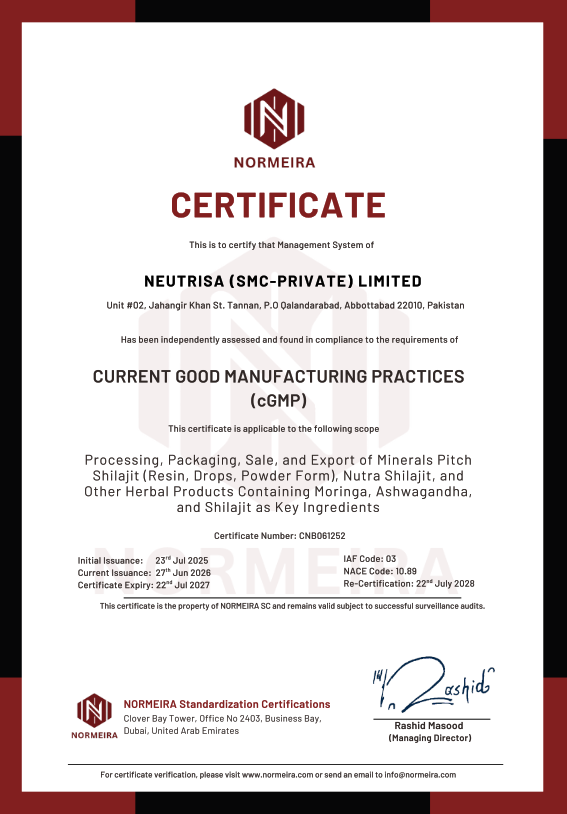
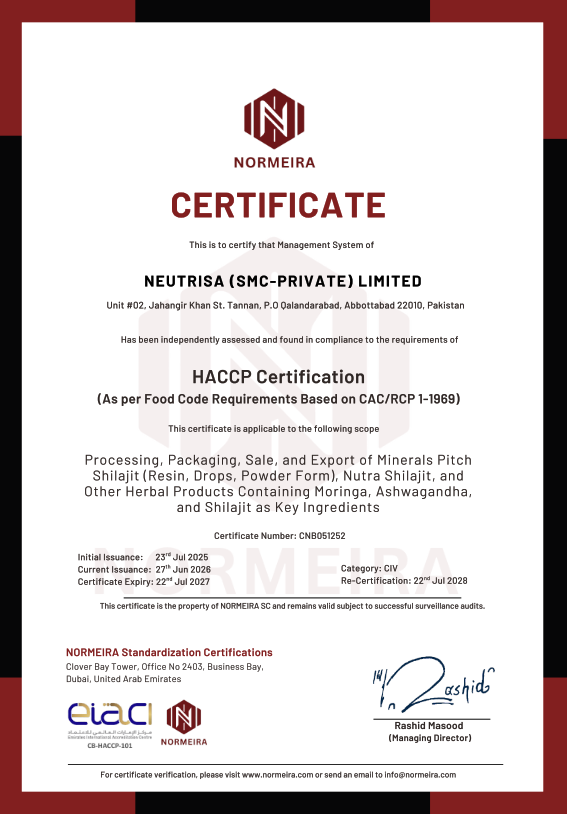
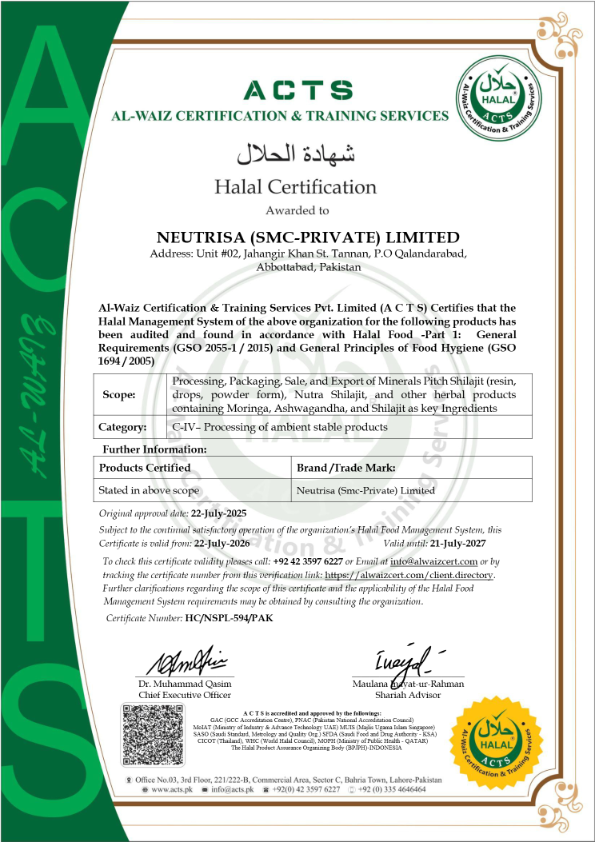
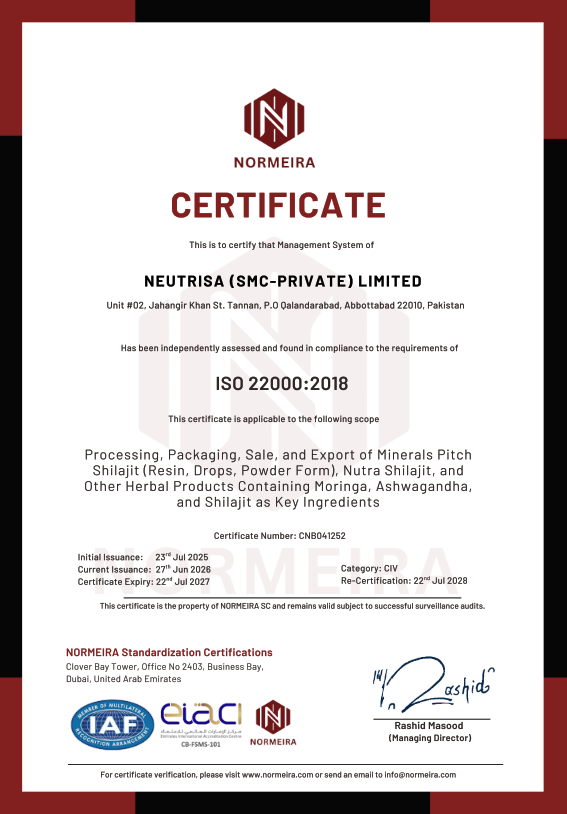
Responsible modern producers use food-grade purification in certified facilities. The best operations hold ISO 22000 certification — a rigorous international standard for food safety management — combined with GMP and HACCP protocols. These ensure the process is controlled, documented, and consistent batch to batch.

Heat, chemical extraction, and aggressive processing all compromise the final product. The best purification is thorough but gentle — removing everything harmful while leaving everything beneficial intact.
Heavy Metals
The most serious safety concern in the Shilajit industry — and one that does not get nearly enough attention.
Because Shilajit forms in rock over centuries, it naturally accumulates minerals from its geological environment — including heavy metals such as lead, arsenic, mercury, and cadmium. In raw, unpurified form, these can be present at dangerous levels. Even after purification, shortcuts in processing or insufficient filtration leave residual heavy metals that accumulate in the body with regular use.

What to check on any Certificate of Analysis: Lead, arsenic, mercury, and cadmium must all be listed and shown to be well below USP, EU, or California Prop 65 thresholds. If a brand does not provide heavy metal test results, do not use the product.
Lab Testing
A Certificate of Analysis is the most important document a Shilajit brand can provide. Here is what it must cover.
| Test Category | What It Checks | Expected Result |
|---|---|---|
| Heavy Metals | Lead, arsenic, mercury, cadmium | Below safety thresholds |
| Aflatoxins | Toxic mould compounds | Absent or below detection limit |
| Microbials | E. coli, Salmonella, yeast, mould | Within safe counts |
| Pesticides | Agricultural chemical residues | Not detected |
| Fulvic Acid % | Active compound concentration | 60–80% humic substances |
First-party testing — where the brand tests its own product — tells you nothing about independence. Only testing by an accredited external laboratory with no commercial relationship to the brand carries genuine credibility. Always verify the laboratory name on the COA is a real, accredited facility.
Himalayan Sourcing
Why the Himalayas remain the gold standard — and what makes this region unlike any other.
The Himalayan mountain range — spanning Pakistan, India, Nepal, and Tibet — is the most historically significant and scientifically documented source of high-quality Shilajit in the world. The geological composition, combined with the biodiversity of plant species that have decomposed over millions of years, produces a resin with a mineral and organic compound profile that is exceptionally broad and complex.
Fulvic acid concentrations found in Himalayan Shilajit are among the highest documented from any source region. The extreme UV exposure, dramatic temperature cycles, and high mineral rock formations at Himalayan altitudes contribute directly to the density and complexity of the resin — conditions not easily replicated elsewhere.
Beyond science, Himalayan Shilajit carries thousands of years of documented traditional use in Ayurvedic medicine. This historical depth provides a practical knowledge base that no other source region can match.
Pakistani Shilajit
Within the Himalayan belt, Pakistan's mountain ranges produce some of the most potent Shilajit available anywhere on earth.
Pakistan's mountain ranges — the Karakoram, the Hindu Kush, and the Pakistani Himalayas — create conditions for Shilajit deposits of exceptional mineral density. The Karakoram range, home to K2 and some of the highest peaks on earth, produces fulvic acid concentrations and trace mineral profiles that consistently rank among the highest of any documented source.
Pakistani Shilajit has been used medicinally in this region for centuries, documented across generations by traditional practitioners in Gilgit-Baltistan and Khyber Pakhtunkhwa — long before it became a globally traded supplement.
Why it has been underrepresented: Despite its exceptional quality, Pakistani Shilajit has historically lacked international certification infrastructure and distribution. This is changing. Properly certified, independently lab-tested Pakistani Himalayan Shilajit is now reaching global markets with the documentation international buyers require.
Altai vs Himalayan Shilajit
An honest comparison — without dismissing either source or overstating either claim.
| Factor | Himalayan (Pakistan/India) | Altai (Russia) |
|---|---|---|
| Typical altitude | 4,000 – 5,500m | 1,500 – 2,500m |
| Fulvic acid concentration | Among the highest documented | Good — lower than Himalayan |
| DBP content | Higher due to altitude conditions | Present but lower density |
| Research base | Thousands of years Ayurvedic use + modern studies | Soviet-era Russian studies |
| Verdict | Gold standard for potency | Legitimate — solid alternative |
Both are real. Both work. Himalayan material edges ahead on compound density and historical documentation. What matters most in either case is sourcing transparency, altitude documentation, and independent lab testing — regardless of origin.
How to Use Shilajit
Method of consumption affects both effectiveness and tolerability. Here is the right way — and the common mistakes worth avoiding.
The Standard Method
Take a portion approximately the size of a small pea — roughly 300mg — and dissolve it in warm water, warm milk, or herbal tea. The liquid should be warm but not boiling. Boiling water degrades heat-sensitive compounds. Stir until fully dissolved. Drink on a relatively empty stomach in the morning or at least thirty minutes before a meal for optimal absorption.
What to Avoid
- Chlorinated tap water — chlorine interacts with organic compounds. Use filtered or mineral water.
- Alcohol — reduces bioavailability and places unnecessary stress on the liver.
- Boiling or microwaving — warmth aids dissolution; high heat degrades active compounds.
- Wet spoons or fingers when scooping — moisture introduced to the jar accelerates degradation.
Cycling
Most experienced practitioners recommend cycling rather than continuous daily use. A common approach is six to eight weeks on followed by one to two weeks off. This prevents adaptation, maintains sensitivity to the effects, and gives the body periodic rest from the detoxification process that fulvic acid supports.
Dosage
Not a guessing game — but context matters. Potency varies widely between products, so these guidelines apply to verified quality resin.
Patience is part of the protocol: Results from Shilajit are not immediate. Give a consistent dose at least four to six weeks before evaluating whether it is working. Changes in energy, mental clarity, and hormonal balance build gradually — not overnight.
Storage
Most people get this wrong. Improper storage degrades quality Shilajit quietly and quickly.
Room temperature away from heat sources. Refrigeration is not necessary — condensation from repeated cold-to-warm exposure introduces moisture.
UV light degrades fulvic acid over time. Keep in original container or dark glass jar, away from windowsills and open shelves.
The main enemy. Keep tightly sealed after each use. Never use wet spoons or fingers — any moisture introduced accelerates degradation.
Shilajit is a porous organic compound and absorbs surrounding smells. Store away from strong-smelling foods, spices, or cleaning products.
Shelf life: Properly stored Shilajit resin has an exceptionally long shelf life — years rather than months. The enemy is not time. It is moisture, heat, and light. Control those three and your Shilajit maintains its potency throughout its use.