Quality proof

Shilajit lab reports, in full.

Four tests from a third-party laboratory, covering the questions buyers ask most: heavy metals, microbiology, fulvic acid content and aflatoxins. Each one below is the original report, not a summary we wrote ourselves.

Heavy metals
01

Heavy metals

Lead, arsenic, cadmium and mercury

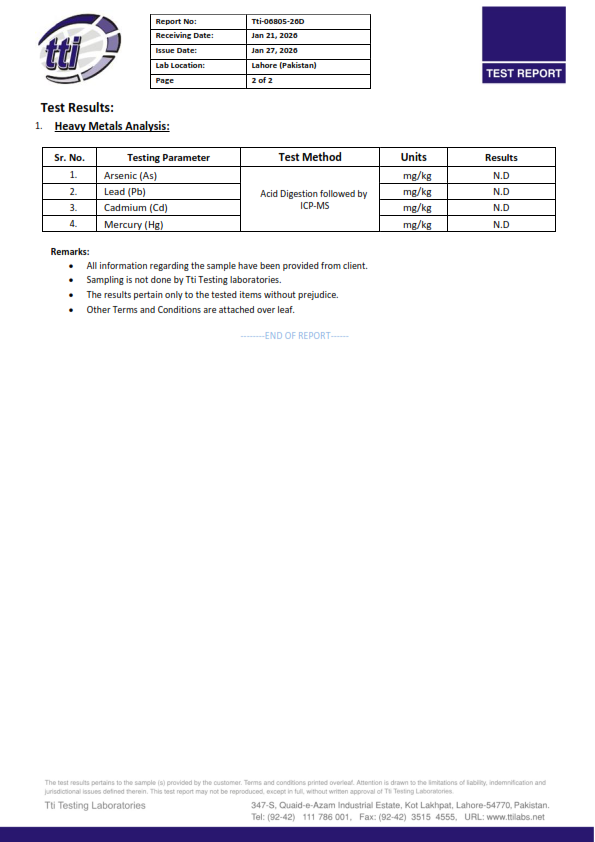
What we test for

The four metals that can be picked up from rock and soil. They matter more for shilajit than for most products, because it comes straight out of the mountain.

What the result tells you

Each metal is measured and set against an accepted safety limit. The report shows the amount found, the limit it is compared with, and whether it passed.

Method
ICP-MS
Microbiological
02

Microbiological

Bacteria, yeast and mould

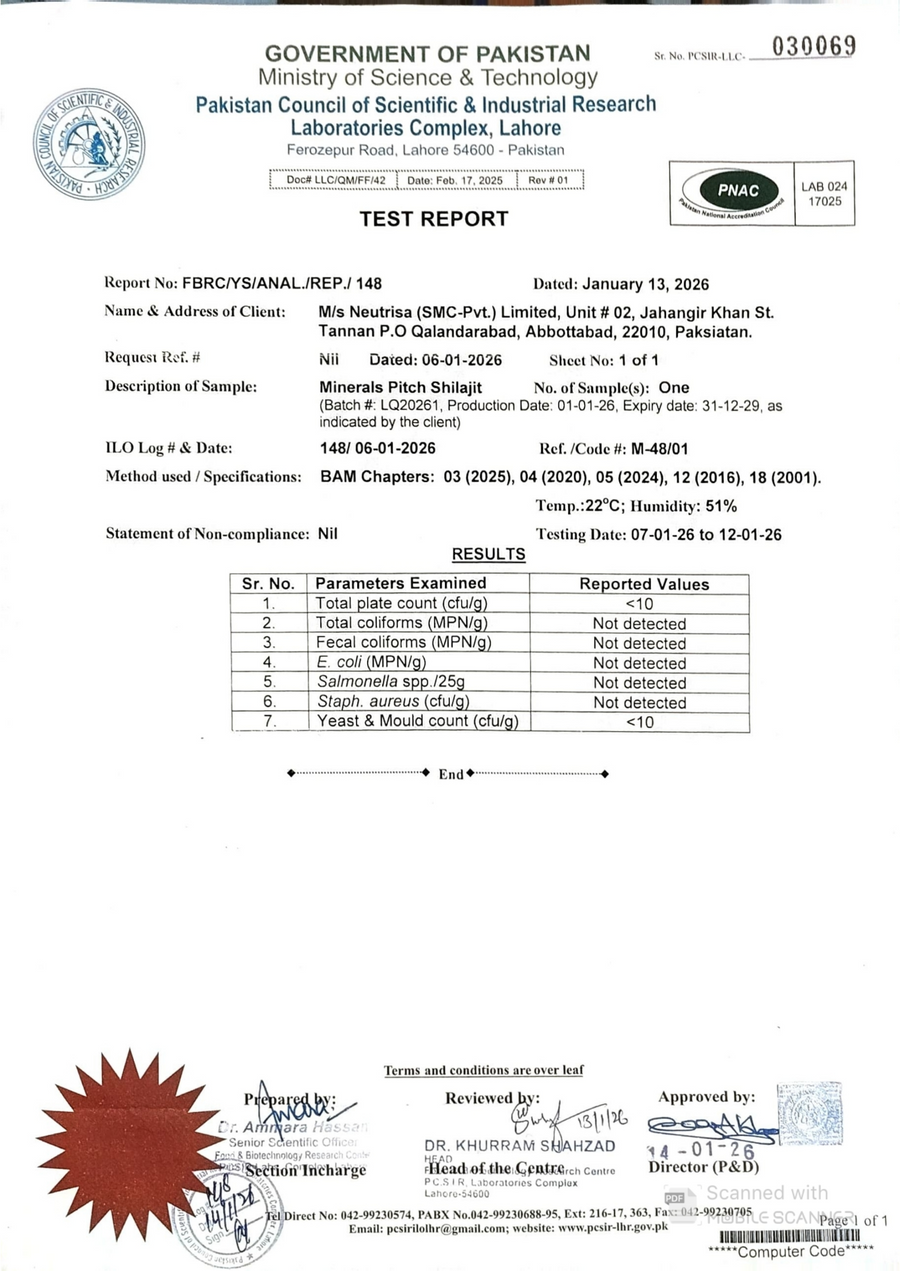
What we test for

The overall count of bacteria, yeast and mould in the resin, plus a check for specific harmful organisms that food labs screen for as standard.

What the result tells you

Whether the resin was processed and packed cleanly. Low counts, and "not detected" against the harmful organisms, are what you want to see.

Fulvic acid
03

Fulvic acid

Fulvic and humic acid content

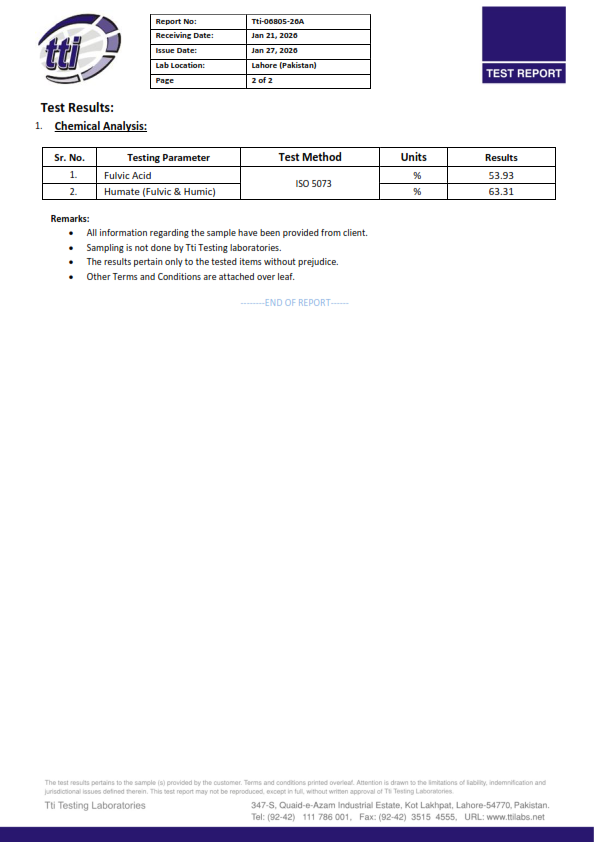
What we test for

How much fulvic acid and humic acid the resin contains, each measured as a percentage of the sample.

What the result tells you

These two compounds are what make shilajit what it is. The figures help tell genuine resin apart from a product that has been diluted or bulked out with something cheaper.

Aflatoxins
04

Aflatoxins

Toxins from moulds

What we test for

Toxins made by certain moulds that can grow on natural products if they are dried or stored in damp conditions. The main types are usually listed on the report as B1, B2, G1 and G2.

What the result tells you

Whether the resin was dried and stored properly after it was collected. Import checks in many markets look for aflatoxins, so a clean result matters to anyone importing too. "Not detected", or a result below the limit, is what you want to see.

Reading a report

Four things to look for on any lab report.

Lab reports are written for other labs, not for the people buying. These are the terms you will see on ours, and on anyone else's.

Result

What was found

The amount the lab actually measured in the sample it was sent.

Limit

What is allowed

The highest amount an accepted standard permits. The result should sit below it.

ND

Not detected

So little, if any, that the lab's equipment could not measure it. The best result a test can give.

mg/kg

How it is measured

Milligrams per kilogram, the same thing as parts per million. The smaller the number, the less there is.

Want the report for a specific batch?

Get in touch and we will send it. Wholesale buyers get the full set of reports and certificates with every quote.